
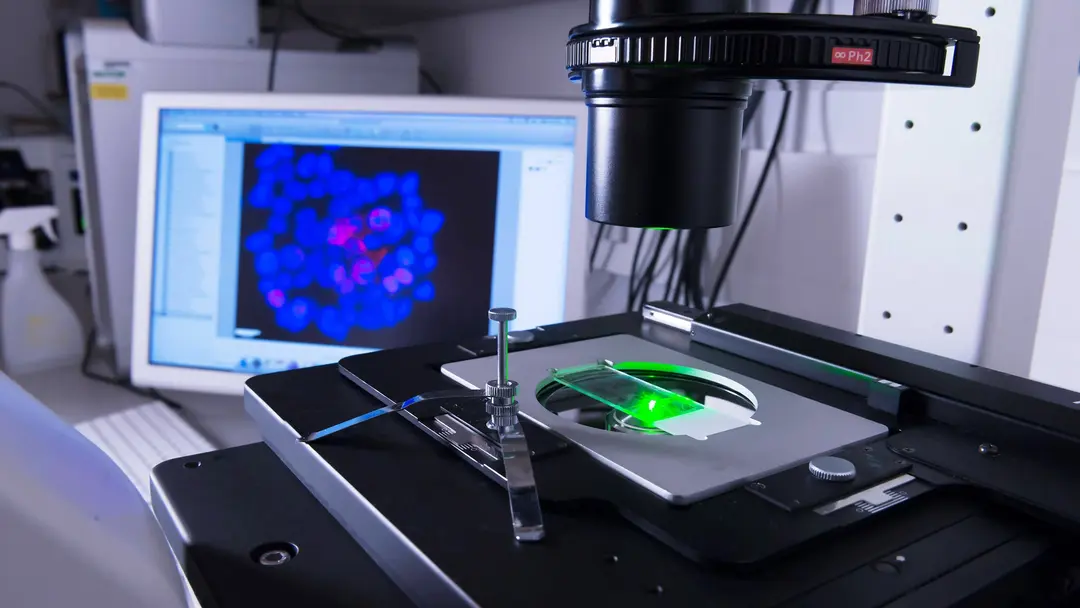
Scientists in the United States have unveiled a next-generation electron microscope capable of producing images up to 200 times sharper than many existing systems, a breakthrough that could significantly advance research in semiconductors, batteries, and other advanced materials.
The new instrument enables researchers to observe atoms and material structures with unprecedented clarity, allowing them to study defects, chemical reactions, and atomic arrangements that were previously difficult or impossible to detect. Scientists believe the technology could accelerate innovation across multiple industries by providing deeper insights into how materials behave at the smallest scales.
Researchers say the enhanced imaging capability will be particularly valuable for the development of next-generation batteries. By examining how battery materials change during charging and discharging, scientists hope to identify ways to improve energy density, charging speed, lifespan, and overall safety.
The semiconductor industry is also expected to benefit from the microscope’s advanced capabilities. Engineers will be able to inspect increasingly smaller and more complex chip components, helping identify manufacturing defects and optimize the design of processors used in artificial intelligence, smartphones, data centers, and other high-performance computing applications.
According to the research team, the microscope combines advanced electron optics, highly sensitive detectors, and sophisticated computational imaging techniques to achieve exceptional resolution while minimizing distortions. The system also allows researchers to capture detailed structural and chemical information from samples with greater accuracy than previous generations of imaging equipment.
Experts believe the breakthrough could contribute to advances in clean energy technologies, quantum materials, nanotechnology, and medical research by enabling scientists to better understand materials at the atomic level. The improved imaging is expected to support the discovery of new materials with enhanced electrical, thermal, and mechanical properties.
The research team plans to expand the microscope’s applications through collaborations with universities, government laboratories, and industry partners. Scientists say the technology has the potential to accelerate scientific discoveries and strengthen the development of future electronic devices, energy storage systems, and other high-tech innovations.